Speed up Spring Planting: Using H2O2 to Boost and Speed Up Seed Germination

sprout seedlings faster with food grade hydrogen peroxideGetting plants into the ground at just the right time can be tricky business. Never mind the weather choosing to co-operate or not, the seedlings have to be the right size to head out into the garden on time; and if they’re not, you just have to wait…

One way to make sure your seedlings are in tip top shape and ready to go right on schedule is to boost your germination rate and the speed of germination by giving seeds a head start as you go.

Most seeds (excepting lettuce) require no light to germinate. But did you know they also require no fertilizers, plant food or other nutrients? Seeds have everything they need packed right into them to germinate. The trigger that gets them started is moisture. Once they get wet, the signal is sent and the seed gets to work getting ready to send out a sprout.

What most people don’t know is that seeds actually do something pretty amazing when they start this process: they breathe!  They respirate in the moist soil and use up the nutrients stored in their outer layer, as well as splitting open that layer, so they can spout.  That’s why if you sow your seed in a soil mix that is too wet they won’t germinate: they can’t breathe and they will rot. Same thing happens if you get super rainy weather outside after planting – the seeds can’t breathe and they die.

So here’s a trick for giving your seeds an extra boost to get them off to a healthy start, especially those indoor seeds that need to get growing in a tight time-frame in order to get into the garden on time…

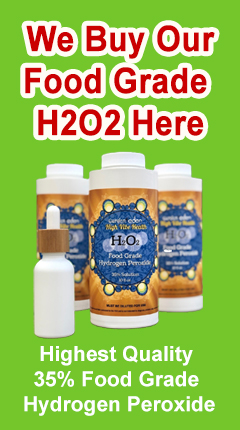
1. Make up a solution of .05 to 1% hydrogen peroxide in a spray bottle. [Dilution: Using 3% H2O2: add 2 parts filtered or distilled water for each part 3% H2O2. Using 35% FoodGradeH2O2 add 1 to 2 TBS to 1 quart (32 ounces) of filtered or distilled water.] Note: when possible do not use chlorinated water, as it inhibits seed growth; if necessary, fill a pitcher with tap water and let stand for 24 hours to allow the chlorine to dissipate; otherwise use filtered or distilled water. (Rain water works fine too!)

2. Saturate a paper towel with the spray and carefully fold the seeds into the center of the towel, keeping them in a single layer if possible.

3. Place the little packet you’ve made on a clean plate or in a clean bowl overnight, or, if you wish, until you see the tiny sprouts start to emerge.

4. Keep the towel moist with the H2O2 solution, but not soaking wet. And DO NOT let it dry out!

5. Plant your seeds, in pots, flats, or right out in the garden, according to the seed and the timing of your sprouting.

This method will cut at least a week off most larger seeds (peas, corn, squash, cucumber, melons, sunflowers etc.) and can cut as much as two weeks off germination time for those finicky folk like celery, peppers, eggplants and spring flowers.

If you’re not sure you’ll have time or patience to keep them in the towel and moist until they sprout just plant them after at least 24 hours of this treatment, they’ll still come up faster. Why? Because the H2O2 oxygenates the seeds and gives them a kick start.

So, next time you’re fretting that you’re late getting those vegetable starts into flats, don’t fret. Just follow these instructions and you’ll get caught up for planting time in a jiffy.

Oh – and one more tip:  once you start them in the flats, you can continue to spray them with a mist of 1% peroxide as they grow – they’ll grow faster and stronger too.

And don’t forget, once they sprout they will absolutely need to be kept moist, and will be ready for a little compost tea or other nutrient rich meal – they have enough stored energy to sprout all by themselves, but once they sprout, they will be hungry!

If you’re not sure how tender the seed is, just use the lesser dilution and experiment. A 1% or less solution seems to be safe for just about any seed, but test it out for yourself and determine the dilution rate that works best for you.  We’ve used .05 and 1% with equal success.

Posted in Articles, Garden Uses | Leave a comment

Hydrogen Peroxide Structure: Oxygen and Water

Hydrogen peroxide is a naturally occuring compound formed within the cell structures of plants and animals, in the earth’s atmosphere and in the waters that cover the earth.

Hydrogen Peroxide Structure:

Formed in the upper atmosphere when water and ozone combine to produce oxygen and hydrogen peroxide; its true chemical role in the mechanism of climate and rainfall is far from being clearly understood even today.

Hydrogen (H) and Oxygen (O) – building blocks of the natural world.

Hydrogen Peroxide: H2O2

Hydrogen peroxide was discovered by French Chemist Louis-Jacques Thenard in 1818. Coining the phrase “eau oxygenee” to describe its properties, Thenard believed it to be an oxygenated form of oxygen.

Oxidation:

An oxidizing agent is a chemical compound that readily transfers oxygen atoms. Hydrogen peroxide is a common oxidizing agent. It breaks down readily in water, becoming water and oxygen as the oxidizing agent releases its extra oxygen atom. This action of releasing the extra oxygen atom bound in the hydrogen peroxide is what is defined as oxidation.

Without water to dilute the effect, highly concentrated formulas of hydrogen peroxide are volatile, unstable, caustic and downright powerful.

It is this powerful action that makes hydrogen peroxide an exceptional rocket and space ship propellant. The simple power of oxidation when concentrated becomes capable of creating enough energy to lift spaceships off of launch pads and into outer space.

Simple yet effective, the actions of hydrogen peroxide in household concentrations (3 to 9 percent by volume in a distilled water solution) are also oxidative, and therefore, solutions of dry hydrogen peroxide once mixed with water become reactive upon contact with the water, and will lose their potency after approximately five hours. Liquid solutions will maintain their potency so long as they are stored properly. Both dry and liquid forms of hydrogen peroxide offer a powerful, effective, non-invasive and environmentally clean household cleaner, disinfectant, odor eliminator and all around useful chemical compound.

Hydrogen peroxide is produced naturally within plant biomass and plays diverse and pivotal roles within the plant kingdom. It is present in trace amounts in rain, water, and snow. It is also present in higher concentrations in such natural healing springs as Lourdes, Fatima and St. Anne’s.

As a commercial chemical it was first used in the restoration of famous paintings to remove sulphur build up without damage to the paint or canvas beneath. It has been long favored in textiles pulping, fabric production and bleaching for its ability to whiten with minimal damage to fiber structures, and has been used as an environmentally sustainable replacement for chlorine bleaching in many paper and pulp operations around the world.

Hydrogen peroxide is a healthy, environmentally clean and sound approach to clean bleaching of paper pulp, water purification, hydroponic and water garden waters, aquaculture and other industries and is used extensively in the disinfection of food preparation equipment, asceptic packaging of food products and disinfection of hospitals, medical laboratories, and sites contaminated by such dangerous compounds as anthrax, viruses and toxic bacteria.

Posted in Articles | Tagged , , , , | 2 Comments

Regulators Rumbling in Back Rooms…

This week brought an unexpected development when an email arrived from a WSJ reporter asking us about home uses of hydrogen peroxide and what we knew about regulations of H2O2…

See what happens if you go away for a week? You miss the news – even if you only see it online or at google or something – a week out of the loop and you miss it! So we didn’t know anything about the Zazi dude or the acetone and beauty parlor peroxide story that everyone else was all ‘a-twitter’ about last week – we were deep in another world in our real estate work – and didn’t even hear one news story all week!

After some conversation with a lovely reporter from WSJ named Ellen, we became aware that what she was wondering was whether or not any of us, or our hydrogen peroxide enthusiasts had heard anything about regulating the sale of our favorite food grade H2O2. Well, clearly we had not – so I thought I should take a look see and check with our known suppliers here and there – anyone seeing anything peculiar? Getting strange calls about not selling FGH2O2?

Happily, thus far it seems that we are in the clear – (but of course after only one week it seems unlikely that there would be any new action or regulation that fast!) But we wanted to make a note of the event – simply because we certainly do not think we should be prohibited from buying and using hydrogen peroxide as we always have – And of course it seems logical that the 3% variety at every grocer and drug store would not be the target of any such crazy idea – after all, 3% H2O2 is 97% water – not exactly easy to use for anything harmful!

But nonetheless, we make note that there seems to be rumbling and so we simply remind ourselves and everyone we know that our friend H2O2 is really NOT a great weapon, for terrorists or anyone else – You cannot simply mix it up and use it to hurt people – it’s just way more complicated than that – and we know there are a lot more lethal ingredients out there that could cause a lot more harm than our friendly H2O2.

Consider that chlorine gas was a major weapon of WWI – I mean, if you want to remove a dangerous toxin, why not look at bleach? (hint hint nudge nudge) And hydrogen peroxide will never break down in the environment to form Dioxin the way chlorine can… So, dear regulators, when this crosses your desks – just shake your head and smile, and let our hydrogen peroxide be – after all, of all the things that might cause harm, surely this is not one at the top of any list –

With all its beneficial and elegant solutions to so many common household challenges, and its clearly superior invisibility in the environmental impact department (remember what else do you use that breaks down to water and oxygen?) hydrogen peroxide is surely no target for the ‘anti-terrorist regulators’. Let’s just hope it stays that way.

Posted in Articles | Tagged , , , , , | 2 Comments

How Green Does Your Garden Grow?

This summer we saw the true fruits of our labor in a garden overflowing with herbs, veggies and fresh fruits. After an early battle with an over abundant and over long production cycle of snails, we finally got them beat back to reasonable numbers and then the garden took off.

Our lilies and stalk flowers are now towering overhead – never seen anything like it… and the herb garden is literally twice the height and volume it achieved last year – lemon balm is four feet tall – oregano, lavender, penny royal, marjoram, thyme and spearmint are all topping 2 and half feet – Gargantua Herbs! We started the basil late, but even it is catching up quickly.

Tomatoes, eggplants and squashes all thriving and producing nicely.

So what was the secret? Well… of COURSE it includes our best buddy hydrogen peroxide – but it also must be attributed to a rock dust infusion.

This year, as Spring was just springing, we took a good supply of last year’s rock dust – which, after sitting out in its outdoor bin over winter had become large soft rocklike clods, and literally just broke them up and tossed them into the gardens until we’d used them all up – and put a nice fat layer of this soft smeary mushy wet “slip” over everything – we didn’t even bother to work it into the soil – after all it was wet enough to seep in on its own.

Then we routinely sprayed with a 1 ounce to 1 quart solution of 3% hyrdogen peroxide in the early weeks – when fog was thick and moisture and damp were the norm (hence the snail explosion!).

After that we continued to water at least once a week with this solution – right into the soil – helps to give those roots the oxygen they need when they’re busy doing serious growing – and voila! HUGE results!

If you need to find the rock dust, look for agrowinn – they make the best rock dust of any we’ve ever found – oh – and we can’t forget the last ingredient – our own home grown worm castings! First batch was ready this Spring as well…

We didn’t have huge amounts, but a little worked into the top soil around new young plants gives them real staying power…

We’ve been watering the Aloe Vera in the window sill with the hydrogen peroxide as well and it’s so big we need to get new pots for it! (Promise we’ll post pictures of all of this in the next few days!)

Happy Gardening! Keep it Green and keep it Healthy!


Posted in Articles, Garden Uses | Tagged , , , , , , , , , , | 6 Comments

Science Daily and Nature Journal Spotlight Hydrogen Peroxide

Take a look at what they’re saying about hydrogen peroxide in the science and nature circles this month… Seems our old standby is getting some good press for a change – nice!

Hydrogen Peroxide Marshals Immune System

ScienceDaily (June 4, 2009) — When you were a kid your mom poured it on your scraped finger to stave off infection. When you got older you might have even used it to bleach your hair. Now there’s another possible function for this over-the-counter colorless liquid: your body might be using hydrogen peroxide as an envoy that marshals troops of healing cells to wounded tissue.

Using the zebrafish as an animal model, researchers in the lab of Harvard Medical School professor of systems biology Timothy Mitchison and Dana Farber Cancer Institute professor Thomas Look have discovered that when the tail fins of these creatures are injured, a burst of hydrogen peroxide is released from the wound and into the surrounding tissue. Teams of rescue-working white blood cells respond to this chemical herald, crawl to the site of damage, and get to work.

“We’ve known for quite some time that when the body is wounded, white blood cells show up, and it’s really a spectacular piece of biology because these cells detect the wound at some distance,” says Mitchison. “But we haven’t known what they’re responding to. We do know something about what summons white blood cells to areas that are chronically inflamed, but in the case of an isolated physical wound, we haven’t really known what the signal is.”

These findings are reported in the June 4 issue of the journal Nature.

Here’s the link with full color imaging and everything 🙂
Hydrogen Peroxide Marshall Immune System

Posted in News | Leave a comment

101 Home Uses of Hydrogen Peroxide Going Mainstream???

Looks like the idea of green and clean is finally going mainstream… ha ha!

Getting clean without poisoning yourself, what a concept!

And so, it seems we’re getting a little notice out there in the world. This week we heard from Lulu.com that our print book, 101 Home Uses of Hydrogen Peroxide has been selected for sale on Amazon.Com! Pretty Exciting News!!

So, seems like we ought to toot our horn a little bit – eh wot? 🙂


Here are a few reviews from some folks who’ve known about us for longer than Amazon: and we have to remind you – we offer a 100% money back guarantee on our ebook – And that Lulu.com print direct is a bit of a discount compared to Amazon – and a bigger discount if you buy the ebook instead of the print version, of course.)

Review Number 1:

  • First, let me say I was not sure what to expect. The ebook is $25. Not a fortune, but you never know what you’re buying, right? I bought the ebook and downloaded it (worked fine). It is a .PDF file. (You have to have Acrobat Reader to read it.)
    I’m happy to say that I really like this book, and think it is a good quality product. It is well formatted, with lots of nice pictures. I know, I know, no one buys things just for pictures or formatting, but it does help to make it easy reading and pleasant. It’s very professional looking, so my first impression was good.More important, the information is good. While it is true that I already knew about many of the uses for peroxide that the book covers, there were also a few nice surprises for me, and new twists on things I already knew about…

    review number one

and here’s another one we really appreciate 😉

Review Number 2:

  • Before reading this amazing guide, little did I know that moulds had infested themselves in my windowsills, under my sink and various other unexpected places in my house. I also did not know that commercially available cleaners were capable of turning my house into a chemical waste dump. 101 Home Uses Of Hydrogen Peroxide helped me clean my home in a simple and less expensive manner and I am sure it will help you do just the same. The information provided in this guide is scientifically documented by sources like National Science Foundation, EPA and NIH. This highly useful guide not only includes step-by-step instructions and handy cleaning chart but also a list of sources from where you can purchase your inexpensive and effective cleaning material.Don’t think twice before choosing this guide if your family has been suffering from bouts of asthma, cold, etc or if you have already spent huge amounts of money and time trying to get rid of the allergies persistent in your home or if you have faced problems like water damage, mold etc. The e-book contains all the tricks of the trade to eliminate stains, odors and their causes.

    Thanks, for the nice review Helpful Household Hints

It is sure a nice thing to find folks who appreciate what we do! And we want you all to know we’ve been taking your questions and answers and talking with our Master Mentor, Walter Grotz and putting together a great piece on everything from agriculture and husbandry to personal health based on our conversations – and we’re looking forward to bringing it to you soon!

Thanks for joining us on the ride! It’s sure been a hoot!

Posted in News | 1 Comment

Anne Dunev: Secrets to Avoiding Winter Flu Blues

humidifierI was amazed at how many people were down with the flu over the last month. We live in Los Angeles, and many of our friends headed for the shores of Florida or the mountains of Colorado. Expecting glowing reports of lazy days on the beach, or blissful hours schussing down the mountains, instead we heard glum descriptions of being bed-ridden with fever, aches and congestion.

It is common knowledge that wintertime is flu season. The Holidays produce extra stress, from close encounters with family and in-laws with the attendant emotional issues, to extra doses of sugar and fat that stretch the boundaries of the waist-line and suppress the immune system further. Add traveling across time zones, which taxes the adrenal glands, dealing with the TSA, and being packed into airplanes with other coughing, sneezing and stressed out folk, and small wonder some succumb to nasty viruses.

I just received some interesting and useful data on avoiding the winter flu blues from one of my favorite health newsletters, produced by the Health Sciences Institute.

Studies indicate it is not the cold of winter that causes an increase in flu, but the lowered humidity. Remember that we have flu viruses around us all the time. They are opportunistic little buggies that only take hold when the internal “environment” of the body allows them to dig in. That helps explain why some people catch everything and others seem to be blessed.

So, using a humidifier in bedrooms in the winter may be your best weapon against the flu. Traveling across country or just around town? You might try a little added moisture touched to the edge of the nostrils. My favorite choice is Egyptian Magic Cream (available at Health Food Stores, my office in Burbank or online.) Egyptian Magic Cream is made of olive oil, bee pollen and propolis, and Royal Jelly and can be used as a skin cream for hydration or skin conditions — very soothing and healing. I much prefer it to petroleum jelly, which is an oil industry by-product.

Here are some other natural remedies to try. Author of Vermont Country Medicine, Dr. D.C. Jarvis, suggests apple cider vinegar (make it organic) and honey at the first sign of a sniffle. Mix a spoonful of the cider vinegar and a bit of honey in a cup of warm water and drink as a healthy toddy that changes the acid/alkaline balance of the body and can stop a virus in its tracks. May promote restful sleep, also.

Put a few drops of hydrogen peroxide in each ear. Lay the head to one side and allow to bubble down in for a few minutes-then switch to the other ear. Some German doctors think that flu and cold viruses may enter the sinuses through the ear canal. The hydrogen peroxide will also soften wax. Don’t forget to be careful about sticking anything in the ear. Just twist a tissue and gently wipe out as needed.

For some people Oscillococcinium by Boiron, the French homeopathic company, is a lifesaver. Homeopathy means “like treating with like” and is made from tiny doses of plant and biological remedies. It can be very effective and I have used it with great success in my practice. You must use Oscillococcinium at the first sign of the flu, but it can knock the virus out before it has a chance to set up housekeeping.

Speaking of setting up house-keeping, viruses seem to linger when the liver/gall bladder is congested. I often treat liver/gall bladder in my practice when a cold or flu hits and patients want a quick recovery. I can usually move a virus through the body in record time, by doing some soft-tissue work on the liver and gall bladder. You can try massaging the area on the right side below and under the ribs. Also, liver/gall bladder supplements may help, such as the herb Milk Thistle and the B Vitamin Choline (best brand is Standard Process® — I love this product.) Avoid sugar and dairy products for the duration. Sugar may suppress the immune system for as long as four hours. The immune system is in action when the white blood cells attack bacteria and viruses and, like living Pac Men, actually surround and ingest the microbes. See the action here.

Flu shot or not? Guess what the side effects of the flu shot are? Achy muscles, congestion, fever and flu-like symptoms. Hmm, seems like that is just what we are trying to avoid. Here is the problem with the flu vaccine. No one can predict what the next flu virus will be- we can’t even make educated guesses, because there is no pattern. Viruses mutate at a rapid rate. That is why they seldom kill us- and only if the body is in greatly weakened state. A virus attacks healthy cells and takes over the cell’s replication process to create more virus cells. But in the process the virus changes into a more benign form, and the body is able to clean up the remains. That is also why it is hard to develop antibiotics against viruses. They change too rapidly for an antibiotic to chase them down and disappear like ghosts in the morning light.

Is there a risk to being vaccinated? Always. Why put more viruses, even weakened ones such as are in flu vaccines, directly into the blood stream? We have far more allergies, and allergy induced asthma, than we have ever had before. There is a constant assault on our immune systems, and that can trigger an inflamed immune system that goes into high alert at the slightest whiff of pollen or spore of mold. Nature developed a way for our bodies to fight infection, but over-use of modern medicine interferes in this natural process to your peril.

Many people say that the vaccines actually seem to make them more susceptible to flu’s. The key to being flu-proof is a strong immune system that knows the difference between a viral microbe and a healthy cell. The internal environment of the body, when healthy, is unwelcoming to disease causing bugs. Just as a well-tended garden repels weeds and pests, human health can be cultivated. It may be hard to find Eden with so many toxins in our environment, but surely a little knowledge about how the body works can be protective armor against the relentless marketing of prescriptions that are more poison than potion.

Effective prevention for colds and flu? As Frank Lloyd Wright said, “Study nature, love nature, stay close to nature. It will never fail you.”

More on Health

Add to StumbleUpon
Add to digg
Add to Reddit
Add to del.icio.us
Search for Related Content


Posted in News | 1 Comment

Karen Leland: 7 Steps To A Super Natural Home and Life

super natural home - beth greer

Beth Greer thought she was leading a healthy life. But after a lifetime of eating right and exercising regularly, at age 49, she was diagnosed with a 5-centimeter tumor in her chest. The tumor, although eventually discovered to be benign, caused pain in her shoulder, which radiated down her arm and made two of her fingers numb.

The three top thoracic surgeons Greer consulted all told her that surgery was the only option. “They all agreed I needed surgery,” says Greer. “They just could not agree on where. One thought he should cut under the collar bone, another under the armpit, and another wanted to remove a rib from my back,” she says.

What all three specialists did agree on, however, was that the surgery was risky. Because there were so many nerves in the area, Greer could potentially lose feeling in her right hand if one of the nerves was cut. Greer, who has a strong belief in the body’s ability to heal itself, weighed her options and decided to go another route.

For six months, she followed an all-organic diet, ate raw food, did an internal cleanse and cleaned up the everyday chemicals found in her home environment. When she went in for a thermoscan one year later, there was no evidence of any mass.


Last week, Greer’s book, Super Natural Home: Improve Your Health, Home, and Planet One Room at a Time (Rodale Books, 20090), was released. In it, she gives relevant research and practical advice on some simple ways to clear the chemicals that go in you, on you and around you:

1. Eat organic or pesticide-free foods whenever possible. One 1997 study from Mt. Sinai Medical Center found that women with high levels of the popular crop pesticide DDE in their blood were four times more likely to develop breast cancer than women with lower levels. Two vegetables Greer says to go organic on all the time include tomatoes and potatoes.

2. Use chemical-free body-care products and cosmetics. Greer says consumers need to read the label on these types of products much more carefully. Watch out for parabens, as well as the chemicals DEA (used as a foaming agent in shampoo and baby wash) and BHT (used as a solvent in lipstick and nail polish). For more information on how the cosmetics you use rate, go to www.safecosmetics.org.

3. Clean your house with non-toxic, natural cleaning products. Try vinegar, baking soda and hydrogen peroxide. Avoid chlorine bleach, strong solvents and ammonia whenever possible. “It’s trial and error as to what will work,” says Greer. “You may need to use some elbow grease, but the trade off is that you’re not using harsh chemicals.” Clorox and Shaklee (among others) both have green cleaning products.

4. Avoid volatile organic compounds (VOCs), which are found in vinyl wallpaper and floor coverings, new carpeting and paint. VOC’s can often be identified by their plastic smell – reminiscent of a beach ball. Companies such as Bed Bath and Beyond and Target are starting to offer products with low or no VOCs.

5. Sleep on a mattress made from untreated, non-toxic natural materials. If you can’t afford a new mattress, buy a wool and organic cotton mattress topper. Natural mattresses are sold at J.C. Penney and IKEA.

6. Switch to sheets and towels made with bamboo or organic cotton. Regular cotton is one of the most intensively sprayed crops in the world. By some estimates, cotton accounts for 25% of all pesticides used in the U.S. Check out Macy’s and Pottery Barn, both of which sell organic cotton.

7. Get rid of non-stick, Teflon cooking pans. When preheated, Teflon emits potentially toxic fumes that have been known to kill pet birds. Use cast-iron, stainless steel, enamel or glass cookware. Martha Stewart and Cuisinart both sell a green line of cookware.

Want to find out how supernatural your home is? Go to www.supernaturalmom.com and take the quiz.

Karen Leland is author of the recently released books Watercooler Wisdom: How Smart People Prosper In the Face of Conflict, Pressure and Change and Time Management In An Instant:60 Ways to Make the Most of Your Day. She is the co-creator of a new line of Productivity Pads from Time Tamer™ and the co-founder of Sterling Consulting Group. For questions, comments or to book Karen to speak at your next event, please e-mail [email protected].

More on Green Living


Posted in News | 1 Comment

Spring Cleaning Article Comes out in West Metro Business!

West Metro Business - Spring Cleaning by Becky MundtThanks to Walter Grotz for sending us in this copy of the West Metro Business which featured our Spring Cleaning article! Nice to see the hard copy, THANKS Walter!!!

Speaking of Walter Grotz, can we just say this man is busier than a bee at pollen time! Last time we had a few minutes to talk he was telling me all about the banana virus in the Phillippines and how they were now going to be using molasses and hydrogen perocide to spray the plants and kill the virus –

and then there were the pigs in Iowa… baby pig still births reduced to zero when the birth canal was flushed with a 3% solution of hydrogen peroxide just as the sow went into delivery – Now their only problem is that they need to make extrea teets for the babies – as the poor mama pigs don’t “have enough faucets” as Walter puts it! So they are making nursing bottles/baffles for the little ones and getting everyone fed –

There’s a lot more, but as always we are runnign behind and will have to catch up with all Walter’s news next time – for now, here’s the West Metro Business from Walter – Thanks Walter! Talk to you soon!

West Metro Business of Minnesota

Posted in News | Leave a comment

New Hydrogen Powered Jet Pack Milestone!

jetpackAnother milestone in Jet Pack Flight was reached in Colorado last week when Eric Scott of Jet P.I. traversed the Royal Gorge, soaring some 1,100 feet above the deep gorge to the other side with his Jet P. I. hydrogen powered Jet Pak.

While the flight lasted less than 30 seconds, Scott said it was “unlike anything else he’d ever tried”. The company is one of several companies around the world now developing and improving personal jet packs for solo flight.

You can read more about the daring men of Jet Pack Flight in the Fox News Story

Posted in News | Comments Off on New Hydrogen Powered Jet Pack Milestone!